TLDR
- Mushroom Text Game: https://github.com/jbgithub22/Mush/tree/main
- Learned about HD-2D games
- Started learning about making 2D games in Unreal Engine
- Made Unreal Engine 2D Game: https://jbgithub22.itch.io/hello-world-test-game
Reminisce
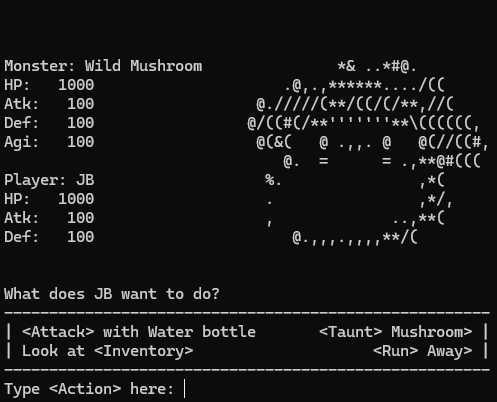
The first game I ever made was in school: ASCII Mushroom text game...
Screenshot of the text game
With one booboo, I skipped the last few classes which taught classes/oop and so made the entire game with just functions. It was fun nonetheless~
So now I want to try my hand at it again
I didn't want to overwhelm myself so I was looking to make 2D games with RPG Maker. Then I moved to looking at Unity.
I was looking at Unity for future-proofing. I wanted to learn just one thing that would give me access to developing many types of games, from mobile all the way up to potentially making VR games.
Then I learned that Unreal Engine can also do it, and with even higher fidelity, and with an even more attractive licensing agreement.
So I started research
Then I found this video by Thomas Brush titles "Can You Really Make A 2D Game In Unreal?" that linked to a video by Cobra Code:
And that's where I learned about HD-2D games, which is a trademark owned by Square Enix by the way.
I gew up playing games like Maplestory, Ragnarok Online, Diablo 2, Red Alert and Starcraft. So learning that I could make these kinds of games with triple-A lighting, shadows and effects is very exciting.
It is easy to say that game development is hard. It is hard for a non-gamedev to understand how hard it is. So I created a list of thing that I needed to do:
Components (Large View)
- Character Sprites
- Swordsman
- Design
- Animation
- Archer
- Design
- Animation
- Mage
- Design
- Animation
- Healer/Priest
- Design
- Animation
- NPCs
- Vendors
- Design
- Animation
- Quest Givers
- Design
- Animation
- Vendors
- Monsters/Antagonists
- Design
- Animation
- Swordsman
- Level Design
- Only 1 town map where the demo/story is set
- Buildings/Locations
- Interiors
- Points of Interest
- History
- Buildings/Locations
- Only 1 town map where the demo/story is set
- Music
- Picking out inspiration music to 'take inspiration from'
- Draft
- Refinement
- Story
- Quest
- Ideas
- Dialogue
- Rewards
- Stake/Pull factor
- Quest
It is a lot. The more characters, NPCs, monsters, items, effects and gameplay you add, naturally the more work you need to do. And as someone who has worked with photoshop in an architectural studio, I shudder at the amount of art I need to draw.
At least so far the rate of increase in work is linear. BUT, the calculus of the amount of work you need to do changes to exponential the more intertwining gameplay mechanics and quests you add. YIKES.
Starting out
So I found an Unreal Engine 2D game tutorial and made this:
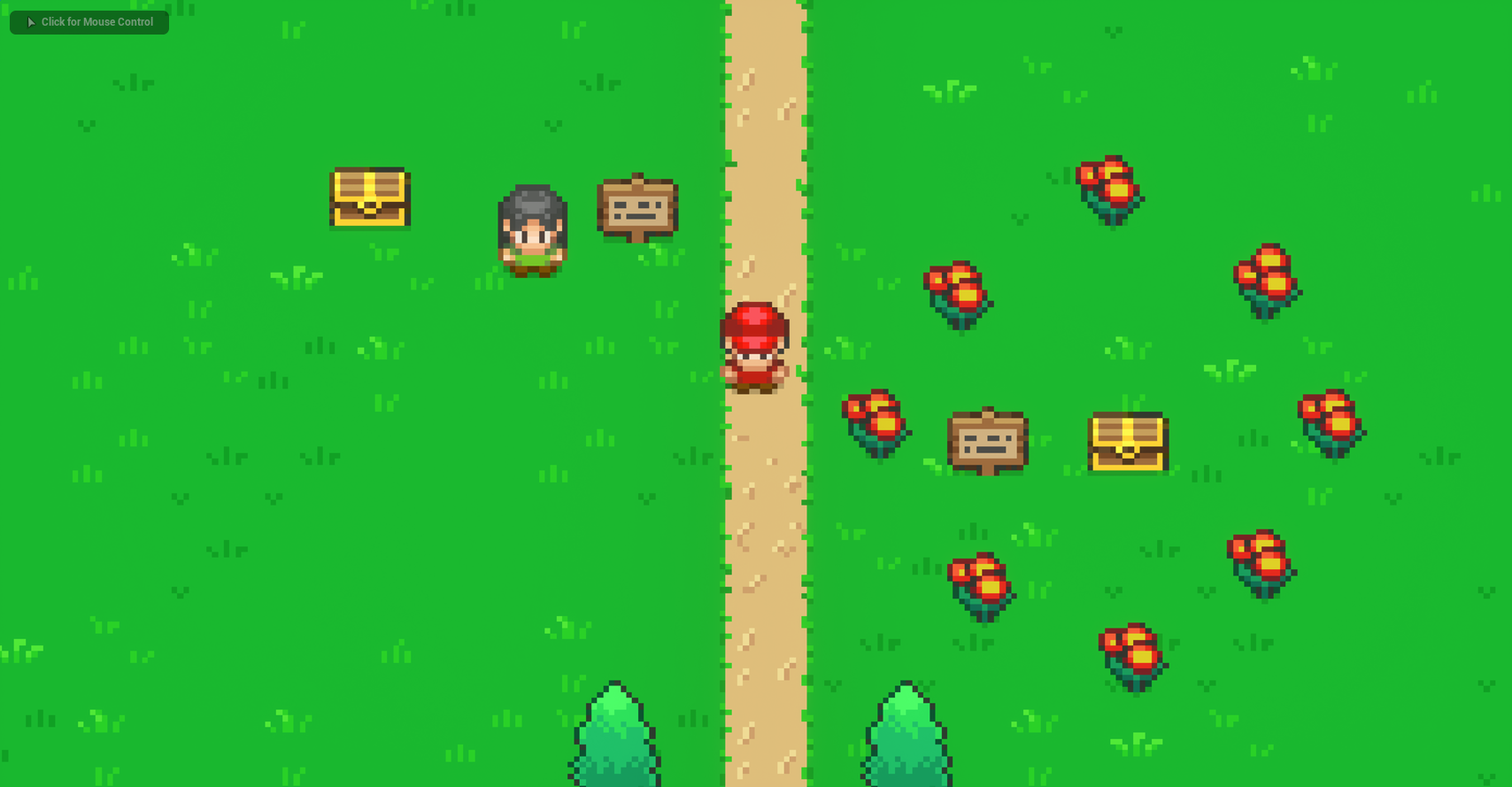
Download link: https://jbgithub22.itch.io/hello-world-test-game
Conclusion
It's fun!
Let's see how it goes~